PPWR – New EU Packaging Regulations and Their Impact on ESG

The PPWR (Packaging and Packaging Waste Regulation) is a new, directly applicable EU regulation concerning packaging and packaging waste. Introduced to replace Directive 94/62/EC, it harmonizes rules across the European Union and covers the entire packaging life cycle – from concept and design, through materials and dimensions, to placing on the market, product packing, shipment handling, and subsequent waste collection and recycling.
From 2030 onwards, almost all packaging placed on the EU market will have to be recyclable. The objective of the PPWR is to reduce excessive packaging waste, increase recycling rates, and promote reusable packaging, while decreasing the use of virgin resources. The regulation is highly significant for companies that use cartons, cardboard boxes in various sizes, packing tapes, or other solutions offered by packaging manufacturers.
The PPWR supports the circular economy strategy and aims to achieve climate neutrality by 2050 by reducing the environmental and social impact of packaging. For companies, this means operating more responsibly – in line with sustainability principles, decarbonization, and transparent ESG reporting. The new requirements include, among others, eco-design, the use of secondary raw materials, and the obligation to provide reliable environmental information and data.
What is the PPWR Regulation?
PPWR (EU Regulation 2025/40) is EU legislation replacing the previous Packaging Directive. As a regulation, it applies directly in all Member States – regardless of local interpretations or market practices. This ensures harmonized rules for all companies operating in the EU market.
The new regulations apply to all types of packaging – from cardboard, glass, and metal to plastics – used in the consumer, commercial, and industrial sectors. They cover both standard shipping cartons and custom-made products, such as packaging with individual prints, in specific colors or shapes. Customized cartons with proprietary printing allow companies to stand out from competitors and enhance brand recognition; however, they must also comply with requirements concerning design for recycling, material composition, and reporting.
The regulation introduces strict criteria regarding packaging design and subsequent disposal. The entire supply chain – from manufacturers and importers to retailers selling products in physical stores or online – must take circularity goals into account and operate in line with the new rules.
What Does the PPWR Cover?
The PPWR focuses on minimizing the negative environmental impact of packaging. The main objectives of the regulation include:
- Reduction of packaging waste – decreasing the volume of waste generated by eliminating excessive structural elements and inefficient product packaging.
- Increased recycling and reuse – designing packaging in a way that enables material recovery and reintegration into the circular economy.
- Recycled content requirements – introducing minimum levels of secondary raw materials in new packaging to reduce dependence on virgin fossil resources.
- Limiting the use of primary raw materials – reducing emissions and environmental damage associated with packaging production.
- EU market harmonization – creating common rules for companies operating in different countries, increasing regulatory certainty and predictability in commercial negotiations.
What Is the Purpose of Introducing the PPWR?
One of the strategic objectives of the PPWR is to establish uniform rules for packaging identification and reporting across the EU. The regulation assumes that by 2030 all packaging will be economically and technically recyclable.
These objectives are aligned with the European Green Deal. According to Deloitte analyses, the implementation of the PPWR could reduce packaging waste by 18 million tonnes and CO₂ emissions by approximately 23 million tonnes by 2030. This means not only environmental benefits, but also improved resource efficiency and reduced financial risk for companies.

Since When Has the PPWR Been in Force?
The PPWR Regulation was published on 22 January 2025 in the Official Journal of the EU. It will enter into force on 11 February 2025 (20 days after publication), and its main provisions will apply from 12 August 2026 (after an 18-month transition period). In practice, this means that from that date onward, companies must implement the new requirements.
Many obligations will be introduced gradually – for example, digital packaging labeling with environmental data will start in 2027, and key recycling and recycled content thresholds will apply from 2030 (with progressively stricter limits from 2035–2040). Key PPWR dates:
- 22 January 2025 – publication of the regulation in the Official Journal of the EU.
- 11 February 2025 – entry into force of the regulation.
- 12 August 2026 – general application of PPWR rules (companies must, among other things, register packaging and apply new labels).
2027–2030 – gradual implementation of additional requirements (e.g., digital labeling from 2027, first recycling and recycled content thresholds from 2030).
Which Companies Will Be Required to Comply with the PPWR?
The PPWR applies to all entities placing packaging on the EU market. This includes:
- Packaging and product manufacturers – companies producing packaging or packing goods under their own brand.
- Importers and distributors – businesses importing packaging or packaged products into the EU, as well as commercial entities making them available on the market.
- Retailers and e-commerce – brick-and-mortar stores and online platforms selling products with packaging, which are required to implement PPWR standards (including, for example, offering reusable options).
- External suppliers – producers of packaging raw materials and secondary materials must provide information on material composition and origin and comply with new criteria.
- Non-EU manufacturers – companies outside Europe placing packaged goods directly on the EU market must appoint an EU representative and comply with reporting and registration requirements.
The regulation does not provide a general exemption for small businesses – even micro-enterprises must comply with the core PPWR obligations (including design and reporting requirements). Exemptions from certain targets may apply to selected special packaging (e.g., medical or hazardous packaging), but in principle, every participant in the packaging value chain becomes a “producer” and assumes responsibility for subsequent stages of the packaging life cycle.
What Specific Obligations Does the PPWR Introduce?
The regulation establishes a broad package of requirements covering the entire packaging life cycle – from design and material composition to reporting and return systems. This means companies must adapt their design, procurement, and logistics processes.
1. Packaging Design and Waste Minimization (Ecodesign)
One of the foundations of the PPWR is the obligation to design packaging in a material-efficient and functional way.
Packaging must be durable and safe for products and people, while avoiding unnecessary structural elements. The use of excessive components, such as false bottoms or multi-material constructions that hinder recycling, will be prohibited.
For transport and e-commerce packaging, from 2030 onwards empty space may not exceed 50% of total volume. In practice, this means better matching carton dimensions to customer needs and more efficient parcel packing. Packing cartons are available in various sizes and shapes, allowing optimal protection of goods during transport and storage; however, under the new rules, their selection should also follow the principle of minimizing empty space and material use.
2. Recycling and Minimum Recycled Content
By 2030, at least 70% of packaging by weight must be effectively recyclable, and from 2038 the threshold will increase to 80%. Additionally, plastic packaging will be required to contain a specified share of recycled content – initially around 30–35%, eventually rising to 50–65%.
This will help reduce dependence on fossil fuels, limit Scope 3 emissions, and build a genuine market for secondary raw materials.

3. Reuse and Return Systems
The PPWR clearly promotes reusable models. In the retail and food service sectors, a specified percentage of packaging will have to be reusable.
Companies offering takeaway food must allow customers to use their own containers without additional charges. Member States will be required to implement deposit return systems for selected packaging types, with collection rates reaching up to 90%.
4. Hazardous Substances and Bans
The regulation restricts the use of PFAS, the so-called “forever chemicals,” as well as heavy metals and other hazardous substances, particularly in food-contact packaging. Selected single-use packaging items that can be replaced with reusable alternatives will also be banned.
5. Labeling, Digitalization, and Access to Information
From 2028, packaging will be required to carry harmonized labels indicating material composition and waste fraction, as well as a digital identifier. This will increase market transparency and make it easier for consumers to make informed purchasing decisions.
6. Registration and Extended Producer Responsibility (EPR)
Companies will be required to register in national systems, report the mass and material composition of packaging, and prepare declarations of conformity. EPR fees will depend on whether packaging meets recycling and recycled content requirements.
What Does This Mean for Businesses?
The scope of obligations under the PPWR goes beyond standard compliance activities. The regulation affects product design, logistics, supplier relationships, raw material price negotiations, as well as ESG data reporting.
In practice, this means a shift in how packaging is perceived – from a cost-related product add-on to a strategic element of sustainability and decarbonization. Companies that take action early will reduce regulatory risk and improve their environmental performance indicators.

PPWR and Sustainability – Is the Requirement Linked to ESG?
The new PPWR requirements are closely aligned with ESG and climate objectives. The regulation encourages companies to reduce the climate impact of packaging – using fewer virgin raw materials and increasing recycling rates translates into lower CO₂ emissions.
Compliance with EU packaging standards is therefore becoming an integral part of ESG strategy – it enforces environmental data transparency and helps build a credible image of a responsible company. Businesses that implement good governance practices are more resilient to risk and strengthen their reputation as ethical and trustworthy organizations.
Additionally, savings related to more efficient resource use (estimated in the billions of euros) and the avoidance of penalties for non-compliance enhance companies’ competitive capabilities. In this way, the PPWR supports the decarbonization of the economy by promoting circular solutions that reduce the carbon footprint across the entire supply chain.
How Can Companies Prepare for the Regulation Today?
Analyze your packaging supply chain – identify packaging types, material composition, and weight to plan reductions and redirect waste toward recycling.
Develop a circular economy and ESG strategy – incorporate PPWR requirements into your sustainability strategy by setting specific KPIs (e.g., recycled content share, empty space reduction targets).
Modernize processes and infrastructure – assess the possibility of switching to reusable packaging, implement digital material-tracking labels, and build partnerships with recyclers.
Ensure reporting and compliance readiness – start collecting data required for reporting (e.g., in national waste registers) and test digitalization systems (such as the EU Digital Product Passport) to meet upcoming obligations on time.
Implementing the PPWR is a significant challenge, but also an opportunity to build competitive advantage based on sustainability. A well-planned adaptation to packaging regulations will not only ensure legal compliance but also support decarbonization goals and improve ESG ratings.
Summary
The PPWR is a regulation that fundamentally changes the way the EU packaging market operates. From 2026 onwards, companies will be required to comply with harmonized requirements for design, recycling, and reporting.
For businesses, this means rethinking packaging concepts, increasing recycled content, and implementing circular economy principles. It is a challenge, but also an opportunity to build competitive advantage and genuinely support decarbonization goals.
Implementing a sustainability strategy can enhance competitiveness, strengthen brand image, and attract investors and customers. Sustainability is an investment in the future that benefits everyone – companies, people, and the planet.
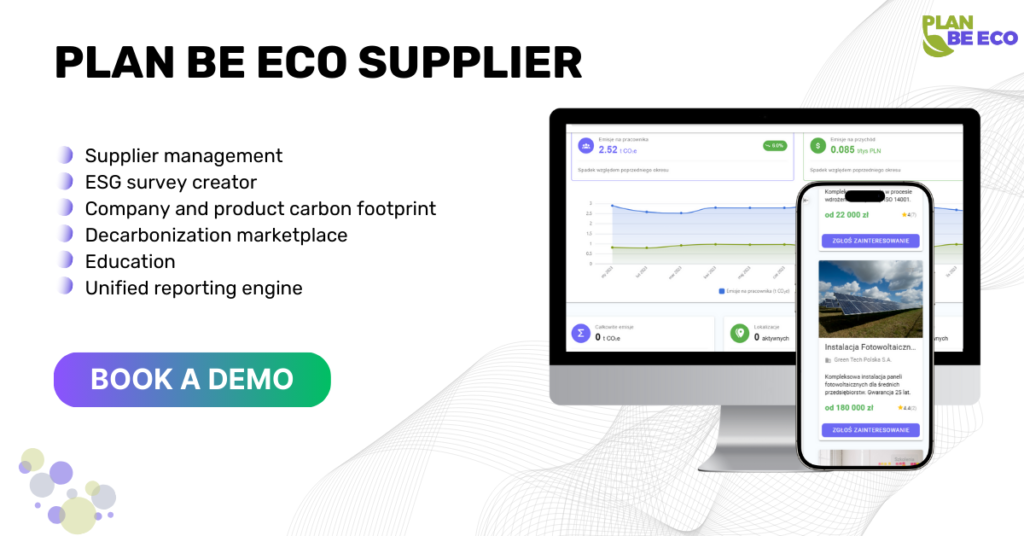
The Be Eco Supplier plan supports companies in achieving full compliance with the PPWR and other ESG regulations. The tool enables carbon footprint calculation (including Scope 3 emissions), collection of data on recycled content and packaging material composition, as well as the creation of supplier surveys and questionnaires for double materiality and reporting purposes. As a result, companies can systematically monitor environmental performance, ensure regulatory compliance, and simultaneously develop robust sustainability strategies.
Contact Plan Be Eco to find out how the tool can be tailored to your company’s needs.

